Archives September 4, 2026

Strategic Human Resource Management Explained

In today’s highly competitive and rapidly changing business environment, people have become one of the most valuable assets of any organisation. While technology, capital, and infrastructure remain important, it is the workforce that drives innovation, productivity, customer satisfaction, and sustainable growth. As organisations face challenges such as digital transformation, global competition, skills shortages, and changing workforce expectations, the role of Human Resource Management (HRM) has expanded significantly.

Human Resource Management is no longer limited to administrative functions such as recruitment, payroll administration, and employee record keeping. Modern organisations increasingly recognise the importance of Strategic Human Resource Management (SHRM), an approach that aligns human resource practices with organisational goals and long-term business strategy.

At Regewall Training Institute, we believe that Strategic Human Resource Management is essential for building high-performing organisations, developing future leaders, and creating sustainable competitive advantage. This article explores the concept of SHRM, its importance, key components, benefits, challenges, and best practices.


What Is Strategic Human Resource Management?

Strategic Human Resource Management (SHRM) refers to the process of aligning human resource policies, practices, and initiatives with an organisation’s strategic objectives and long-term goals.

Unlike traditional HR management, which often focuses on day-to-day administrative activities, SHRM takes a broader and more proactive approach by ensuring that the workforce contributes directly to organisational success.

Strategic Human Resource Management seeks to answer questions such as:

  • What skills will the organisation need in the future?
  • How can talent be developed to support future growth?
  • How can employee performance align with organisational goals?
  • What workforce strategies support competitive advantage?

SHRM positions human resources as a strategic business partner rather than a support function.


The Evolution of Human Resource Management

Traditional Human Resource Management

Historically, HR departments focused on:

  • Recruitment and hiring
  • Compensation administration
  • Employee records management
  • Compliance and labour relations
  • Payroll processing

These functions remain important, but they often operated separately from broader business strategies.


Strategic Human Resource Management

Modern organisations increasingly view employees as strategic assets.

Strategic HR focuses on:

  • Workforce planning
  • Talent development
  • Leadership succession
  • Employee engagement
  • Organisational culture
  • Performance management
  • Change management

This shift enables organisations to leverage human capital as a source of competitive advantage.


Why Strategic Human Resource Management Matters

Organisations operate in environments characterised by constant change.

Key Drivers Include

Digital Transformation

Technology is changing job roles, required skills, and workplace processes.

Global Competition

Organisations compete for talent and market share on a global scale.

Workforce Expectations

Employees increasingly value career development, flexibility, and meaningful work.

Skills Gaps

Many industries face shortages of specialised skills and leadership talent.

These factors require organisations to adopt strategic approaches to workforce management.


The Core Objectives of Strategic Human Resource Management

Strategic HRM seeks to achieve several important objectives.

Aligning HR with Organisational Strategy

The primary goal of SHRM is ensuring that HR practices support business objectives.

Examples include:

  • Developing talent for future growth
  • Supporting expansion initiatives
  • Improving organisational performance
  • Enhancing competitiveness

When HR strategy aligns with business strategy, organisations perform more effectively.


Building a High-Performance Workforce

Strategic HR focuses on creating environments where employees can maximise their potential.

This involves:

  • Setting clear expectations
  • Supporting professional development
  • Recognising achievement
  • Encouraging accountability

High-performing employees contribute directly to organisational success.


Enhancing Organisational Agility

Organisations must adapt quickly to changing conditions.

Strategic workforce planning helps organisations:

  • Respond to market changes
  • Adopt new technologies
  • Manage organisational transformation
  • Address emerging skills requirements

Agility improves resilience and long-term sustainability.


Key Components of Strategic Human Resource Management

Workforce Planning

Workforce planning involves identifying current and future staffing needs.

Key activities include:

  • Assessing workforce capabilities
  • Forecasting future talent requirements
  • Identifying skills gaps
  • Planning succession strategies

Effective workforce planning ensures organisations have the right people in the right roles at the right time.


Talent Acquisition

Recruitment is no longer simply about filling vacancies.

Strategic talent acquisition focuses on attracting individuals whose skills, values, and potential align with organisational goals.

Strategic Recruitment Approaches

  • Employer branding
  • Competency-based recruitment
  • Diversity-focused hiring
  • Future skills recruitment

Effective recruitment strengthens organisational performance and competitiveness.


Learning and Development

Continuous learning is essential in modern workplaces.

Strategic learning initiatives may include:

  • Professional training programmes
  • Leadership development
  • Digital skills training
  • Mentoring and coaching
  • Technical certifications

Investing in employee development improves performance, adaptability, and retention.


Performance Management

Strategic performance management links employee performance to organisational objectives.

Effective systems include:

  • Clear goals
  • Performance reviews
  • Feedback mechanisms
  • Development plans
  • Recognition programmes

Performance management helps employees understand how their work contributes to organisational success.


Employee Engagement

Engaged employees are more committed, productive, and innovative.

Strategic HR initiatives seek to improve engagement through:

  • Meaningful work
  • Recognition
  • Career development opportunities
  • Strong leadership
  • Positive workplace culture

Higher engagement often leads to improved organisational outcomes.


Leadership Development and Succession Planning

Future organisational success depends on strong leadership.

Strategic HR focuses on:

  • Identifying leadership potential
  • Developing future leaders
  • Creating succession plans
  • Strengthening executive pipelines

Leadership continuity supports long-term organisational stability and growth.


Strategic HRM and Organisational Culture

Organisational culture influences employee behaviour, performance, and satisfaction.

Strategic HR helps shape culture by:

  • Promoting organisational values
  • Supporting diversity and inclusion
  • Reinforcing ethical behaviour
  • Encouraging collaboration
  • Building trust

A positive culture contributes significantly to employee retention and organisational effectiveness.


The Role of Technology in Strategic HRM

Technology has transformed many aspects of human resource management.

Human Resource Information Systems (HRIS)

These platforms support:

  • Employee records management
  • Performance tracking
  • Recruitment processes
  • Workforce analytics

Artificial Intelligence in HR

AI can assist with:

  • Candidate screening
  • Skills assessments
  • Employee support
  • Learning recommendations
  • Workforce forecasting

Data Analytics

People analytics enables organisations to:

  • Predict workforce trends
  • Measure employee engagement
  • Analyse turnover rates
  • Assess performance patterns

Data-driven HR supports more informed decision-making.


Strategic HRM and Change Management

Change is inevitable in modern organisations.

Strategic HR plays a critical role in:

  • Communicating change initiatives
  • Supporting employees during transitions
  • Developing new skills
  • Managing resistance
  • Building resilience

Successful change management often determines the success of organisational transformation efforts.


Benefits of Strategic Human Resource Management

Improved Organisational Performance

When employee efforts align with business objectives, organisational performance improves.


Increased Employee Retention

Employees are more likely to remain with organisations that invest in their growth and wellbeing.


Enhanced Productivity

Skilled, engaged, and motivated employees contribute more effectively to organisational goals.


Better Talent Management

Strategic recruitment and development practices help organisations attract and retain top talent.


Stronger Competitive Advantage

Organisations with effective human capital strategies often outperform competitors.


Greater Adaptability

Strategic workforce planning improves organisational resilience during periods of change.


Challenges in Implementing Strategic HRM

Despite its benefits, organisations may encounter challenges.

Resistance to Change

Employees and managers may resist new HR initiatives.


Skills Gaps

HR professionals may require new competencies in analytics, technology, and strategic planning.


Resource Constraints

Smaller organisations may face budget limitations that affect workforce development efforts.


Rapid Technological Changes

Evolving technologies require continuous adaptation of workforce strategies.


Balancing Short-Term and Long-Term Priorities

Organisations must manage immediate operational needs while planning for future workforce requirements.

Addressing these challenges requires leadership commitment and ongoing investment.


Best Practices for Effective Strategic Human Resource Management

Align HR and Business Strategies

Ensure workforce initiatives support organisational objectives.

Invest in Employee Development

Provide continuous learning and professional development opportunities.

Use Data and Analytics

Leverage workforce data to improve decision-making.

Promote Employee Engagement

Create environments where employees feel valued and motivated.

Focus on Leadership Development

Develop future leaders through structured succession planning.

Encourage Continuous Improvement

Regularly evaluate HR practices and implement improvements.


The Future of Strategic Human Resource Management

The future of HR will be influenced by several key trends:

Artificial Intelligence and Automation

HR processes will become increasingly automated and data-driven.

Skills-Based Workforce Planning

Organisations will focus more on capabilities than traditional job descriptions.

Hybrid and Remote Work Models

Flexible work arrangements will continue to shape workforce strategies.

Diversity, Equity, and Inclusion

DEI initiatives will remain central to organisational success.

Employee Experience Management

Organisations will place greater emphasis on employee wellbeing and satisfaction.

Strategic HR leaders will play an increasingly important role in navigating these changes.


The Role of Regewall Training Institute

At Regewall Training Institute, we are committed to helping organisations and HR professionals build strategic workforce capabilities that support long-term success.

Our training programmes focus on:

  • Strategic Human Resource Management
  • Leadership Development
  • Talent Management
  • Performance Management
  • Employee Engagement
  • Organisational Development
  • Change Management
  • Data Analytics for HR
  • Workforce Planning
  • Digital Transformation

Our goal is to equip professionals with practical skills and strategic insights that enable organisations to thrive in a constantly evolving business environment.


Conclusion

Strategic Human Resource Management is far more than an administrative function. It is a comprehensive approach that aligns people, talent, and organisational goals to create sustainable success. By focusing on workforce planning, talent development, employee engagement, leadership succession, and performance management, SHRM positions human capital as a key driver of competitive advantage.

As organisations face increasing complexity, technological change, and evolving workforce expectations, the importance of strategic HR will continue to grow. Businesses that invest in their people and align workforce strategies with their long-term vision will be better equipped to innovate, adapt, and succeed.

At Regewall Training Institute, we believe that people are the foundation of every successful organisation. Through Strategic Human Resource Management, organisations can unlock the full potential of their workforce and build a future defined by excellence, innovation, and sustainable growth.

“Aligning People, Strategy, and Performance for Long-Term Organisational Success.”

Regewall Training Institute
Emotional Intelligence in Leadership

In today’s fast-changing and highly interconnected world, leadership requires more than technical expertise, strategic thinking, and decision-making abilities. While these competencies remain important, research and workplace experience consistently show that effective leadership also depends on the ability to understand, manage, and influence emotions. This capability is known as Emotional Intelligence (EI) or Emotional Quotient (EQ).

Leaders are responsible for guiding teams, managing change, resolving conflicts, building relationships, and creating environments where people can perform at their best. Achieving these outcomes requires an understanding of human emotions and behaviour. Leaders who possess high emotional intelligence are often better equipped to inspire trust, enhance collaboration, improve employee engagement, and navigate complex organizational challenges.

At Regewall Training Institute, we believe that emotional intelligence is one of the most critical leadership competencies in the modern workplace. Organizations that develop emotionally intelligent leaders are often more resilient, productive, and successful in achieving their goals.


Understanding Emotional Intelligence

Emotional Intelligence refers to the ability to recognize, understand, manage, and influence emotions in oneself and others.

Unlike intellectual intelligence (IQ), which focuses on cognitive abilities and problem-solving skills, emotional intelligence focuses on interpersonal effectiveness and emotional awareness.

Emotional intelligence helps individuals:

  • Understand their emotions
  • Manage emotional reactions
  • Build stronger relationships
  • Communicate effectively
  • Make balanced decisions
  • Lead with empathy and integrity

For leaders, emotional intelligence serves as the foundation for effective people management and organizational success.


The Evolution of Leadership

Traditional leadership models often focused on authority, hierarchy, technical competence, and control. While these elements remain relevant, modern workplaces require a more people-centred approach.

Today’s leaders must manage:

  • Diverse teams
  • Remote and hybrid workforces
  • Workplace stress
  • Organizational change
  • Employee engagement challenges
  • Cross-cultural collaboration

As workplaces become more complex, emotional intelligence has emerged as a key differentiator between average leaders and exceptional leaders.


Why Emotional Intelligence Matters in Leadership

Leadership is fundamentally about people. Leaders interact with employees, customers, stakeholders, partners, and communities on a daily basis.

High emotional intelligence enables leaders to:

Build Trust

Employees are more likely to trust leaders who demonstrate empathy, integrity, and understanding.

Improve Communication

Emotionally intelligent leaders communicate clearly and adapt their communication style to different audiences.

Resolve Conflicts Effectively

They address disagreements constructively and focus on solutions rather than blame.

Motivate Teams

They understand what drives individuals and create environments that encourage high performance.

Navigate Change

They help employees manage uncertainty and remain engaged during periods of transformation.

Emotional intelligence strengthens leadership effectiveness across all levels of an organization.


The Five Core Components of Emotional Intelligence

Psychologist Daniel Goleman identified five key elements of emotional intelligence that are particularly relevant to leadership.

1. Self-Awareness

Self-awareness is the ability to recognize and understand one’s emotions, strengths, weaknesses, values, and behaviours.

Self-aware leaders:

  • Understand their emotional triggers
  • Recognize how their actions affect others
  • Acknowledge strengths and limitations
  • Accept constructive feedback

Benefits of Self-Awareness

  • Better decision-making
  • Increased confidence
  • Improved relationships
  • Greater authenticity

Leaders who understand themselves are better positioned to lead others effectively.


2. Self-Regulation

Self-regulation refers to the ability to manage emotions and remain composed under pressure.

Self-regulated leaders:

  • Control impulsive reactions
  • Remain calm during challenges
  • Demonstrate professionalism
  • Adapt to changing circumstances

Benefits

  • Improved problem-solving
  • Better crisis management
  • Enhanced credibility
  • Stronger leadership presence

Employees often look to leaders for stability during difficult situations.


3. Motivation

Emotionally intelligent leaders are driven by internal motivation rather than external rewards alone.

Highly motivated leaders:

  • Pursue excellence
  • Embrace challenges
  • Focus on long-term goals
  • Demonstrate resilience
  • Inspire others through their commitment

Leadership Impact

Motivated leaders create positive energy and encourage a culture of achievement and continuous improvement.


4. Empathy

Empathy is the ability to understand and share the feelings, perspectives, and experiences of others.

Empathetic leaders:

  • Listen actively
  • Consider employee concerns
  • Respect diverse viewpoints
  • Support team members during difficult times

Benefits of Empathy

  • Improved workplace relationships
  • Greater employee satisfaction
  • Enhanced collaboration
  • Stronger trust

Empathy is particularly important in today’s diverse and multicultural workplaces.


5. Social Skills

Social skills involve the ability to build and manage relationships effectively.

Leaders with strong social skills can:

  • Communicate clearly
  • Influence stakeholders
  • Resolve conflicts
  • Build networks
  • Foster teamwork

Benefits

  • Stronger collaboration
  • Enhanced teamwork
  • Better stakeholder engagement
  • Improved organizational culture

Socially skilled leaders are often effective at creating positive and productive work environments.


Emotional Intelligence and Decision-Making

Effective decision-making requires both logic and emotional awareness.

Emotionally intelligent leaders can:

  • Evaluate situations objectively
  • Manage emotional biases
  • Consider stakeholder perspectives
  • Balance short-term and long-term consequences

By understanding emotions, leaders avoid reacting impulsively and make more thoughtful decisions.


Emotional Intelligence and Employee Engagement

Employee engagement is one of the most significant drivers of organizational performance.

Emotionally intelligent leaders contribute to engagement by:

Creating Psychological Safety

Employees feel comfortable sharing ideas and concerns.

Recognizing Contributions

Acknowledging achievements increases motivation and job satisfaction.

Supporting Development

Leaders invest in employee growth and career progression.

Building Positive Relationships

Trust and respect strengthen workplace commitment.

Engaged employees are often more productive, innovative, and loyal.


Emotional Intelligence and Conflict Resolution

Conflict is a natural part of organizational life. The way leaders respond to conflict can significantly influence team dynamics and performance.

Emotionally intelligent leaders:

  • Remain neutral and objective
  • Listen to all perspectives
  • Address issues respectfully
  • Focus on solutions
  • Promote collaboration

Rather than escalating tensions, they facilitate constructive dialogue and mutual understanding.


Emotional Intelligence and Change Management

Organizations frequently experience change due to technological innovation, restructuring, market shifts, and strategic transformations.

Change often creates:

  • Uncertainty
  • Anxiety
  • Resistance
  • Stress

Emotionally intelligent leaders help employees navigate change by:

  • Communicating openly
  • Demonstrating empathy
  • Addressing concerns
  • Building confidence
  • Maintaining trust

These behaviours increase adaptability and improve change outcomes.


The Role of Emotional Intelligence in Team Leadership

High-performing teams require more than technical skills. They depend on effective relationships, trust, and collaboration.

Emotionally intelligent leaders:

Foster Inclusion

They value diverse perspectives and encourage participation.

Strengthen Collaboration

They build strong interpersonal connections among team members.

Manage Performance Effectively

They provide feedback constructively and support employee development.

Encourage Innovation

They create environments where employees feel safe to share ideas.

These behaviours contribute to stronger team performance and organizational success.


Emotional Intelligence in a Digital Workplace

The rise of remote work, virtual collaboration, and digital communication has increased the importance of emotional intelligence.

Digital workplaces often face challenges such as:

  • Reduced face-to-face interaction
  • Communication misunderstandings
  • Employee isolation
  • Cultural differences

Emotionally intelligent leaders address these challenges by:

  • Maintaining regular communication
  • Showing empathy
  • Encouraging collaboration
  • Supporting employee wellbeing

Human connection remains important, even in highly digital environments.


Developing Emotional Intelligence as a Leader

Emotional intelligence is not a fixed trait. It can be developed through practice, reflection, and continuous learning.

Practice Self-Reflection

Regularly assess your emotions, decisions, and leadership behaviours.

Seek Feedback

Invite constructive feedback from colleagues, mentors, and team members.

Improve Active Listening

Focus on understanding others before responding.

Manage Stress Effectively

Develop strategies that support resilience and emotional balance.

Build Empathy

Take time to understand the experiences and perspectives of others.

Invest in Leadership Development

Participate in training programs that strengthen emotional intelligence and interpersonal skills.

Continuous growth leads to stronger leadership capabilities.


Common Barriers to Emotional Intelligence

Some leaders struggle with emotional intelligence due to:

Lack of Self-Awareness

Not recognizing personal emotional patterns.

Poor Communication Habits

Failing to listen or communicate effectively.

Resistance to Feedback

Avoiding opportunities for personal growth.

High Stress Levels

Allowing pressure to influence behaviour negatively.

Recognizing these barriers is the first step toward improvement.


Organizational Benefits of Emotionally Intelligent Leadership

Organizations led by emotionally intelligent leaders often experience:

  • Higher employee engagement
  • Better team performance
  • Improved collaboration
  • Reduced workplace conflict
  • Lower employee turnover
  • Stronger innovation
  • Enhanced customer relationships
  • Greater organizational resilience

Emotional intelligence contributes directly to both people-focused and business-focused outcomes.


The Future of Leadership and Emotional Intelligence

As workplaces continue to evolve, emotional intelligence will become even more important.

Future leaders will need to:

  • Lead diverse teams
  • Navigate uncertainty
  • Support employee wellbeing
  • Manage digital work environments
  • Foster inclusion and collaboration

While technology and artificial intelligence will continue to transform work, the human aspects of leadership will remain essential.

The leaders of tomorrow will be distinguished not only by what they know, but by how effectively they connect with and inspire others.


The Role of Regewall Training Institute

At Regewall Training Institute, we believe that emotional intelligence is a cornerstone of effective leadership and organizational success.

Our professional development programmes focus on:

  • Leadership Development
  • Emotional Intelligence
  • Communication Skills
  • Conflict Resolution
  • Change Management
  • Team Building
  • Strategic Leadership
  • Organizational Development
  • Professional Skills Enhancement

Through practical learning experiences, we help professionals develop the emotional and leadership competencies required to succeed in modern workplaces.


Conclusion

Emotional intelligence has become one of the most important leadership competencies in today’s business environment. Leaders who understand and manage emotions effectively are better equipped to build trust, communicate clearly, engage employees, navigate change, and drive organizational success.

By developing self-awareness, self-regulation, motivation, empathy, and social skills, leaders can strengthen relationships, improve decision-making, and create workplaces where people thrive. As organizations continue to face new challenges and opportunities, emotional intelligence will remain a key factor in effective leadership and sustainable growth.

At Regewall Training Institute, we believe that great leadership begins with understanding people. By investing in emotional intelligence development, organizations can cultivate leaders who inspire performance, strengthen cultures, and create lasting positive impact.

“Leading with Intelligence, Inspiring with Empathy, and Succeeding Through Human Connection.”

Regewall Training Institute

Using Microsoft Project to Improve Project Planning and Control

Successful project management depends on effective planning, scheduling, monitoring, and control. In today’s fast-paced business environment, organizations are under constant pressure to deliver projects on time, within budget, and according to scope. Whether managing infrastructure projects, information technology initiatives, government programmes, development projects, or corporate transformations, project managers need reliable tools to plan and control project activities effectively.

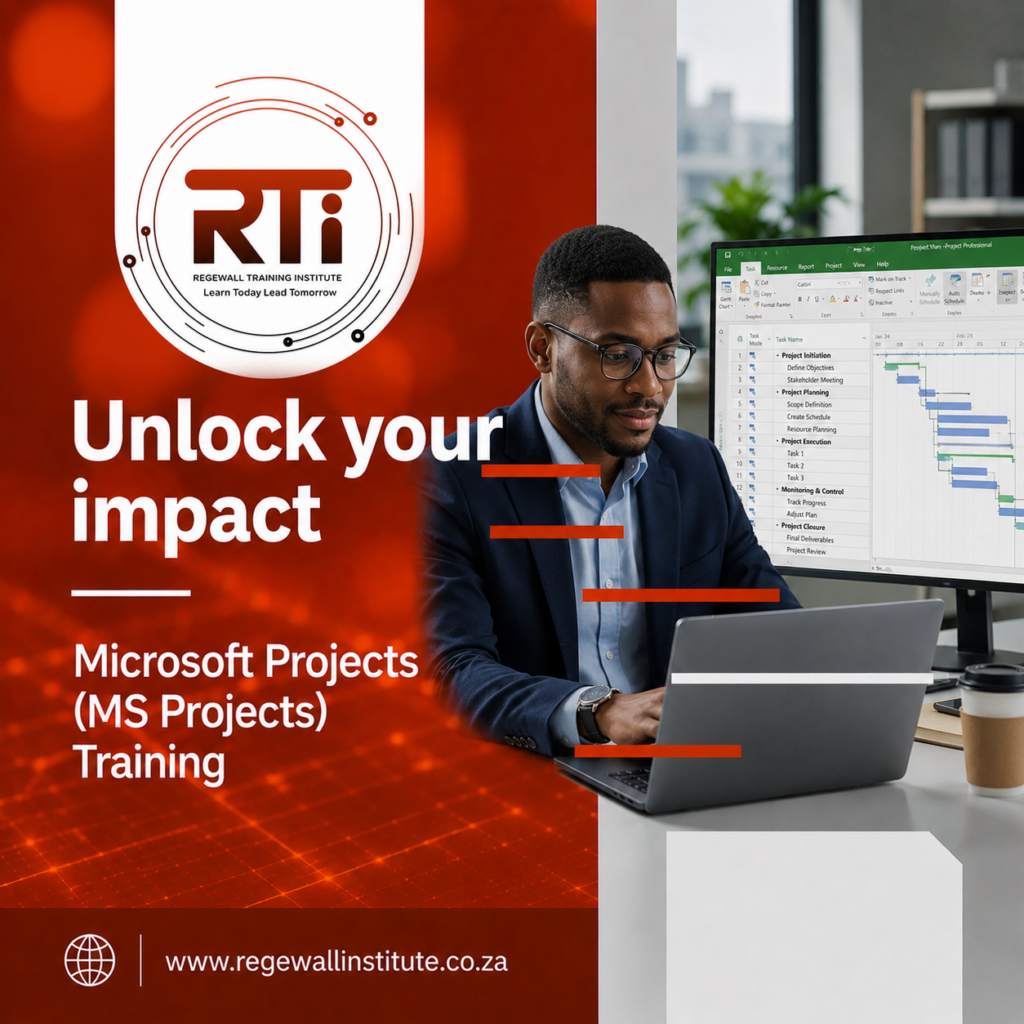
One of the most widely used project management tools is Microsoft Project, a powerful project planning and management application designed to help organizations organize tasks, allocate resources, monitor progress, and manage project performance. Microsoft Project provides project managers with the ability to create detailed project schedules, track milestones, identify risks, and monitor project outcomes through data-driven insights.

At Regewall Training Institute, we believe that mastering Microsoft Project is essential for project professionals seeking to improve planning accuracy, enhance project control, and increase project success rates. This article explores how Microsoft Project can be used to strengthen project planning and control across various sectors.


Understanding Microsoft Project

Microsoft Project is a project management software solution developed by Microsoft that assists project managers in planning, scheduling, executing, monitoring, and reporting on projects.

The software enables users to:

  • Create project plans
  • Develop project schedules
  • Allocate resources
  • Track project progress
  • Monitor budgets
  • Manage project risks
  • Generate reports and dashboards

Microsoft Project supports both simple and complex projects and is widely used in public sector organizations, private companies, NGOs, development agencies, and multinational corporations.


The Importance of Project Planning and Control

Project planning and control are critical processes that determine project success.

Project Planning Involves

  • Defining objectives
  • Identifying deliverables
  • Scheduling activities
  • Allocating resources
  • Estimating costs
  • Assessing risks

Project Control Involves

  • Monitoring progress
  • Measuring performance
  • Managing changes
  • Addressing risks
  • Controlling costs
  • Maintaining schedules

Without effective planning and control mechanisms, projects are more likely to experience delays, budget overruns, scope creep, and operational challenges.


Why Organizations Use Microsoft Project

Organizations increasingly rely on Microsoft Project because it provides structured tools that support project management best practices.

Key Benefits Include

  • Improved project visibility
  • Better resource management
  • Enhanced scheduling
  • Increased accountability
  • Stronger reporting capabilities
  • Better stakeholder communication
  • Improved decision-making

Microsoft Project enables project managers to move from reactive management to proactive project control.


Building Effective Project Plans with Microsoft Project

Defining Project Scope

Every successful project begins with a clear understanding of its scope.

Microsoft Project helps project managers:

  • Define project objectives
  • Break work into manageable components
  • Establish deliverables
  • Organize activities systematically

A clearly defined scope reduces confusion and supports effective execution.


Creating Work Breakdown Structures (WBS)

The Work Breakdown Structure (WBS) is a key project management tool used to organize project activities.

Microsoft Project allows users to:

  • Break large projects into smaller tasks
  • Create task hierarchies
  • Organize work packages
  • Improve project visibility

Benefits of WBS

  • Better planning
  • Clear task ownership
  • Improved scheduling accuracy
  • Enhanced accountability

A well-structured WBS forms the foundation of effective project management.


Developing Project Schedules

Scheduling is one of Microsoft Project’s most powerful capabilities.

Project managers can:

  • Create task lists
  • Define start and finish dates
  • Establish dependencies
  • Set milestones
  • Track deadlines

Schedule Components Include

  • Tasks
  • Summary tasks
  • Dependencies
  • Milestones
  • Critical paths

Scheduling tools help managers understand project timelines and identify potential scheduling challenges.


Using Gantt Charts for Project Visualization

One of the most popular features of Microsoft Project is the Gantt Chart.

A Gantt Chart provides a visual representation of:

  • Project tasks
  • Activity durations
  • Dependencies
  • Project timelines
  • Milestones

Benefits of Gantt Charts

  • Easy schedule visualization
  • Improved project tracking
  • Enhanced stakeholder communication
  • Better understanding of project status

Project managers can quickly identify progress and potential bottlenecks through graphical displays.


Resource Management in Microsoft Project

Resources are often among the most important factors influencing project success.

Microsoft Project helps organizations manage:

  • Human resources
  • Equipment
  • Materials
  • Financial resources

Resource Planning Features

Resource Assignment

Assign specific resources to project tasks.

Resource Utilization Analysis

Monitor resource workloads and identify overallocations.

Capacity Planning

Evaluate resource availability across project activities.

Workload Balancing

Distribute assignments more effectively.

Proper resource management improves productivity and reduces operational inefficiencies.


Identifying and Managing the Critical Path

The Critical Path represents the sequence of activities that directly affect project completion.

Microsoft Project automatically identifies:

  • Critical tasks
  • Dependencies
  • Scheduling constraints

Benefits

  • Improved schedule control
  • Better prioritization
  • Early detection of delays
  • Enhanced risk management

Understanding the critical path enables project managers to focus attention on activities that have the greatest impact on project success.


Budgeting and Cost Management

Project cost overruns remain one of the most common project challenges.

Microsoft Project supports cost control through:

Cost Estimation

Assign costs to:

  • Resources
  • Tasks
  • Materials
  • Activities

Budget Tracking

Monitor expenditure against planned budgets.

Cost Reporting

Generate financial performance reports.

Variance Analysis

Identify differences between planned and actual costs.

Effective financial monitoring helps organizations maintain budget discipline throughout the project lifecycle.


Tracking Project Progress

Monitoring progress is a key aspect of project control.

Microsoft Project allows managers to:

  • Record task completion percentages
  • Update schedules
  • Compare actual progress against plans
  • Identify delays

Progress Tracking Benefits

  • Improved visibility
  • Timely intervention
  • Better performance management
  • More accurate forecasting

Regular progress updates support informed decision-making.


Managing Project Risks

Risk management is essential for project success.

Microsoft Project supports risk management by helping managers:

  • Monitor critical activities
  • Identify schedule delays
  • Analyze resource constraints
  • Track project dependencies

Risk-Related Insights

  • Resource shortages
  • Schedule conflicts
  • Budget variances
  • Milestone delays

Early detection allows project teams to implement mitigation strategies before risks become major problems.


Baselines and Performance Measurement

A baseline represents the approved project plan against which actual performance is measured.

Microsoft Project allows users to:

  • Save project baselines
  • Compare planned and actual schedules
  • Measure cost performance
  • Evaluate project outcomes

Importance of Baselines

  • Performance tracking
  • Schedule control
  • Cost monitoring
  • Accountability

Baseline comparisons help project managers understand project status and identify areas requiring corrective action.


Monitoring Project Performance with Earned Value Management (EVM)

Microsoft Project supports Earned Value Management techniques that integrate:

  • Scope
  • Schedule
  • Cost

Key Metrics Include

Planned Value (PV)

The value of planned work.

Earned Value (EV)

The value of completed work.

Actual Cost (AC)

The actual expenditure incurred.

These metrics help project managers assess project health and forecast future performance.


Reporting and Dashboards

Effective reporting is critical for stakeholder communication.

Microsoft Project provides reporting tools that enable users to create:

  • Project status reports
  • Resource reports
  • Budget reports
  • Schedule reports
  • Portfolio summaries

Benefits

  • Better decision-making
  • Increased transparency
  • Improved accountability
  • Enhanced stakeholder engagement

Clear reporting helps keep stakeholders informed and aligned.


Collaboration and Communication

Project success depends on effective communication among stakeholders.

Microsoft Project supports collaboration by providing:

  • Shared project information
  • Centralized schedules
  • Status tracking
  • Performance visibility

Improved collaboration enhances teamwork and project coordination.


Microsoft Project in Different Sectors

Government Projects

Government agencies use Microsoft Project for:

  • Infrastructure development
  • Policy implementation
  • Public sector reforms
  • Service delivery initiatives

NGOs and Development Organizations

Development agencies use Microsoft Project to:

  • Manage donor-funded programs
  • Monitor implementation plans
  • Track milestones
  • Support monitoring and evaluation

Construction Projects

Construction firms use Microsoft Project for:

  • Scheduling
  • Resource allocation
  • Progress monitoring
  • Contractor coordination

Information Technology Projects

IT teams use Microsoft Project to:

  • Plan software development activities
  • Monitor implementation schedules
  • Manage resources
  • Track project deliverables

Common Challenges and How Microsoft Project Helps

Schedule Delays

Microsoft Project identifies critical activities and schedule dependencies.

Resource Constraints

Resource management tools help optimize allocations and workloads.

Cost Overruns

Budget tracking features improve financial control.

Communication Gaps

Dashboards and reports improve information sharing.

Scope Management

Task structures and project plans help maintain project focus.

These capabilities contribute to more successful project outcomes.


Best Practices for Using Microsoft Project

Establish Clear Project Objectives

Define project goals before creating schedules.

Build a Detailed Work Breakdown Structure

Break projects into manageable activities.

Update Project Information Regularly

Keep schedules and progress reports current.

Monitor Critical Paths

Focus on tasks that directly affect project completion.

Use Baselines

Compare actual performance against approved plans.

Track Resources Carefully

Manage workloads and capacity consistently.

Generate Regular Reports

Communicate progress to stakeholders proactively.


Future Trends in Project Management Technology

As project management continues to evolve, Microsoft Project is increasingly being integrated with:

  • Artificial Intelligence (AI)
  • Power BI dashboards
  • Cloud-based collaboration platforms
  • Predictive analytics
  • Automated reporting systems

These innovations will help project managers make faster, smarter, and more data-driven decisions.


The Role of Regewall Training Institute

At Regewall Training Institute, we provide practical project management training designed to strengthen planning, execution, monitoring, and control capabilities.

Our training programs cover:

  • Microsoft Project
  • Project Management Fundamentals
  • Advanced Project Scheduling
  • Risk Management
  • Monitoring and Evaluation (M&E)
  • Resource Management
  • Project Reporting
  • Data Analytics for Project Managers
  • Power BI Integration

Our goal is to equip professionals with the tools and skills needed to deliver successful projects consistently.


Conclusion

Microsoft Project is one of the most powerful tools available for improving project planning and control. By providing structured methods for scheduling, resource management, budget monitoring, risk assessment, progress tracking, and reporting, it enables organizations to manage projects more effectively and achieve their objectives with greater confidence.

As projects become increasingly complex, the ability to plan accurately, monitor performance continuously, and respond proactively to challenges becomes even more important. Microsoft Project helps project managers move beyond spreadsheets and manual tracking systems toward a more strategic, data-driven approach to project management.

At Regewall Training Institute, we believe that mastering Microsoft Project is an investment in professional excellence and organizational success. By leveraging its capabilities effectively, project managers can improve efficiency, strengthen accountability, and deliver projects that create lasting value.

“Planning Better, Managing Smarter, and Delivering Projects Successfully with Microsoft Project.”

Regewall Training Institute

REGISTER FOR OUR 2026 COURSES!

Welcome to Regewall Training Institute. Please fill in our short form and one of our friendly team members will contact you back.

    X
    REGISTER FOR OUR 2026 COURSES!